A useful pharmacy quote must show more than a discount: it must connect pack size, MRP, tax treatment, purchase price, shelf life, freight and replacement terms. By the end, you will be able to compare syrup offers, calculate your real margin and verify whether a supplier’s product and documents support the claims on the label.
Key takeaways
- Compare pack size, MRP, GST, freight and payment terms—not just the quoted rate.
- Check the formulation, legal category, batch details, expiry and directions before stocking.
- Calculate margin from MRP, purchase cost, discounts, GST and other order charges.
- Request licences, product documents and samples before placing your first order.
What a complete Ayurvedic enzyme syrup price list must show
A complete Ayurvedic enzyme syrup price list must show the commercial terms needed to compare two quotations; it is not a government-standard price schedule. A pharmacy reseller price list is useful only when it identifies the product, legal category and pack economics.
| Field | What the sheet must state |
|---|---|
| Product | Name, composition reference, batch or lot and bottle volume |
| Regulatory | Legal category and label or licence reference |
| Price | MRP, GST treatment, PTR, PTS or distributor rate, and PCD franchise rate |
| Trade terms | MOQ, scheme quantity, freight responsibility and payment terms |
| Stock risk | Minimum remaining shelf life at dispatch and expiry-return policy |
| Claims | Transit-damage replacement and whether free goods appear on the invoice |
| Control | Revision date and expiry policy |
MRP is the customer-facing ceiling, not your buying cost. PTR is the pharmacy purchase or invoice rate; PTS is a distributor or stockist rate; a PCD franchise rate may apply to a territory-based commitment. A 30% discount from MRP can still cost more after GST, freight, compulsory stock or non-returnable short-dated bottles.
Use this fill-in line before accepting an ayurvedic enzyme for syrup price list:
- Product and pack: __ | MRP: __ | GST included/excluded: __
- PTR/PTS/franchise rate: __ | MOQ: __ | Scheme quantity: __
- Batch or lot: __ | Minimum shelf life at dispatch: __
- Freight payer: __ | Payment terms: __ | Revision date: __
- Expiry returns, damaged-stock replacement and free-goods invoice treatment: __
How to check the syrup’s formulation, label and use
Before stocking it, establish whether the bottle contains a digestive enzyme preparation, a general digestive tonic, or another Ayurvedic formulation.
1. Request the approved composition and manufacturing licence. Record every named herb or enzyme, its quantity per 5 ml or 10 ml, bottle volume, recommended dose, age limits, contraindications or cautions, opening-period instructions, and stated storage temperature.
2. Do not treat “enzyme” as proof of Ayurvedic classification. Check whether the product is licensed as a classical Ayurvedic medicine or an Ayurvedic proprietary medicine, then match its composition and permitted claims with the licence and physical label.
- Manufacturer or marketer name and address
- Applicable Ayurvedic licence details
- Batch or lot number
- Manufacturing date and expiry or use-before date
- Net contents
- Complete ingredient panel
- Dosage directions and cautions
- Retail sale price
Reject disease-treatment claims that exceed the approved label. Treat paediatric, liver-support, and appetite claims the same way; a commercial name cannot expand the permitted use.
Keep the sealed bottle at the stated temperature and transport it upright. Do not accept stock with a broken seal, leakage, unexplained sedimentation, or a change in colour, odour, or consistency. After opening, follow the label’s discard period and storage instruction rather than assuming the expiry date remains sufficient.
A catalogue description never replaces the label, licence, and approved formulation.
When syrup, capsules or drops deserve pharmacy shelf space
Syrup earns shelf space when local customers prefer a liquid, struggle to swallow capsules, or need a measured dose. Do not assume Arozyme capsules, enzyme drops and syrup deliver equivalent amounts.
| Format | Best fit | Practical advantages | Shelf risk |
|---|---|---|---|
| Syrup | Customers needing liquid or measured dosing | Easier swallowing; dose measured with the supplied cup or spoon | Larger footprint; leakage, breakage, sedimentation and post-opening stability concerns |
| Arozyme capsules | Adults who accept solid dosage forms | Compact storage; portable; no liquid leakage | Not suitable for customers who cannot swallow capsules; check the label’s age direction |
| Enzyme drops | A narrower age or dosing requirement | Small-volume measurement when the label permits that use | Higher measuring error; small demand may leave stock near expiry |
Before comparing formats, read each label for composition, named enzymes or herbs, strength per 5 ml, 10 ml or capsule, bottle volume, dose, age limit and storage temperature. A dropper does not prove paediatric suitability, and a capsule is not automatically equivalent to a spoonful of syrup.
Check the seal, cap, leakage, sedimentation and opening-period instruction. Record minimum remaining shelf life at dispatch and the supplier’s rules for short-dated, damaged or opened stock.
Start with a controlled quantity. Review weekly sell-through, repeat purchases and expiry exposure; reorder only when repeat demand justifies the format’s storage and return risk. Keep that commercial decision separate from claims about digestion, appetite or liver support.
How to calculate the real pharmacy margin from a quoted rate
A 20% discount from an MRP of ₹180 does not mean your cost is ₹144. Let MRP = ₹180 and retailer discount = 20%; the GST-inclusive invoice purchase price is ₹144. If GST is 12% and input tax credit is recoverable, the GST-exclusive cost is ₹128.57. If tax is nonrecoverable, use ₹144 instead.
Use these variables:
- Net acquisition cost = invoice purchase cost + nonrecoverable GST + distributor freight per bottle + payment charges + damaged-stock allowance.
- Gross rupee margin = sale price − net acquisition cost.
- Margin percentage = gross margin ÷ sale price × 100.
| Cost item | Calculation | Amount |
|---|---|---|
| Invoice cost | ₹180 × 80% | ₹144.00 |
| Freight, payment and damage | ₹4 + ₹2 + ₹1.50 | ₹7.50 |
| Net acquisition cost | ₹144 + ₹7.50 | ₹151.50 |
| Gross margin | ₹180 − ₹151.50 | ₹28.50 |
| Margin percentage | ₹28.50 ÷ ₹180 | 15.83% |
MRP is the customer-facing ceiling, not your buying cost. If 10 bottles include 2 free bottles, spread the ₹1,440 invoice total across 12 bottles: ₹120 each before other costs. For short-dated stock, add expected expiry loss; ₹6 reduces effective margin to ₹22.50, or 12.5%.
Before accepting a lower unit price in a price list ayurvedic franchise offer, compare MOQ, territory or exclusivity, compulsory promotional stock, credit period, freight and replacement obligations. Ask Focus Healthcare Pvt Ltd for these fields in one dated rate sheet and compare its net cost with ordinary wholesale rates.
Related product
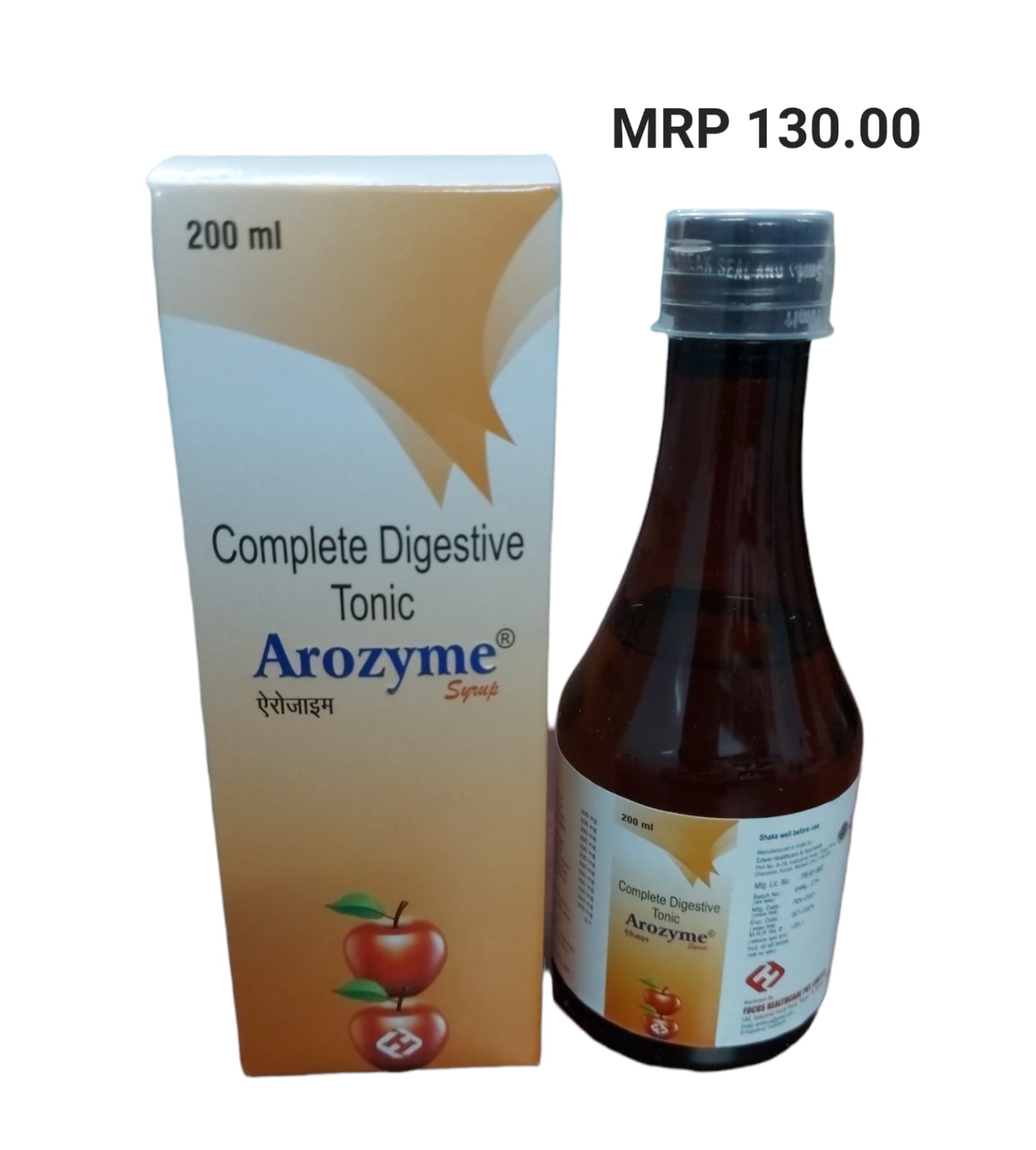 | Ayurvedic Enzyme Syrup ₹150 Ayurvedic Enzyme Syrup View product → |
What to request and verify before placing the first order
Do not pay an ayurvedic enzyme syrup supplier until the invoice identity, product label and licence documents point to the same accountable entity. A supplier may be a manufacturer, loan-licence manufacturer, marketer or distributor.
| Supplier status | Match against | Verify |
|---|---|---|
| Manufacturer | Invoice, label and licence | Manufacturing licence and batch-release record |
| Loan-licence manufacturer | Invoice and physical pack | Named licensed manufacturer and approved composition |
| Marketer | Invoice and label | Marketing identity plus manufacturer’s licence documents |
| Distributor | Invoice and stock | GST registration, source invoice and batch documents |
Request these documents before committing money or shelf space:
- Current bottle label and carton artwork, ingredient panel, approved composition, bottle volume, dosage, cautions and licence details.
- Manufacturer or marketer identity, GST invoice sample and applicable GST treatment.
- Certificate of analysis for the relevant batch, batch-release or testing record, and Good Manufacturing Practices evidence.
- A dated rate sheet or revision number showing MRP, purchase rate, minimum order quantity, freight and written trade terms.
Check whether the product is licensed as a classical Ayurvedic medicine or an Ayurvedic proprietary medicine. An AYUSH logo or the word herbal does not prove licensing, batch testing or quality release.
Get these points in writing: minimum remaining shelf life at dispatch, batch number supplied, expiry-return window, leakage or short-dated replacement, shortage-reporting period, freight payer, credit period, payment method and whether free goods are invoice-linked.
Inspect the first carton against the documents. Retain the invoice, batch details and correspondence, and reorder only after every mismatch is resolved.
Frequently asked questions
What should a complete Ayurvedic enzyme syrup price list show?
It should identify the product and pack size, MRP, reseller or purchase rate, GST treatment, minimum order quantity, freight, payment terms and delivery details.
How do you check an Ayurvedic enzyme syrup’s formulation and label?
Compare the ingredient list, quantity, dosage, intended use, warnings, batch number, manufacturing date, expiry date, net volume and manufacturer details with the physical pack.
How do you calculate the real pharmacy margin from a quoted rate?
Start with the selling price or MRP, subtract the actual landed cost—including purchase price, GST treatment, freight, discounts and leakage—and divide the result by the selling price.
What should a pharmacy request before placing its first order?
Request the supplier’s business and licence details, product label and formulation documents, price list, invoice terms, batch and expiry information, sample pack and replacement policy.
Keywords