
A “uterine tonic” is a commercial product category, not a diagnosis, so the same phrase can conceal very different claims about menstrual discomfort, discharge, irregular cycles or postpartum support. By the end, you will know when a syrup may be considered, which warning signs require referral, and what an Ayurvedic franchise partner must verify before selling or promoting it.
Key takeaways
- Treat “uterine tonic” as a marketing category, not a diagnosis.
- Investigate heavy bleeding, severe pain, pregnancy concerns and persistent discharge first.
- Check ingredients, dosage, batch number, expiry date and licence details.
- Record complaints and refer customers when symptoms need medical assessment.
What does “female uterine tonic” mean in clinical practice?
A female uterine tonic is a marketing category, not a single Ayurvedic diagnosis. It may support a licensed indication such as menstrual discomfort, irregular cycles, leucorrhoea, menopausal symptoms or postpartum recovery, but it does not treat every gynaecological complaint.
Someone searching “ayurvedic pcd franchise female uterine tonic for problems” should check the exact ingredients and permitted indication before treating the phrase as a clinical promise.
| Complaint or condition | What a tonic may support | What needs separate diagnosis or treatment |
|---|---|---|
| Menstrual discomfort | Support for normal cycle comfort when the cause is known | Severe dysmenorrhoea, heavy bleeding, fibroids, endometriosis or anaemia |
| Irregular cycles | Support alongside assessment of the menstrual pattern | Pregnancy, thyroid disease, polycystic ovary syndrome or perimenopause |
| Leucorrhoea | Support only after infection is excluded | Foul-smelling discharge, itching, pelvic pain or sexually transmitted infection |
| Menopausal symptoms | Symptom support for an authorised indication | Bleeding after menopause |
| Postpartum recovery | Support after a clinician confirms recovery is uncomplicated | Retained tissue, infection, heavy bleeding or breastfeeding-related concerns |
| Fertility concerns | No promise of conception or removal of “blockage” | Infertility, pelvic pain, ovarian disease or tubal problems |
Do not use a tonic as a substitute for assessment if bleeding soaks a pad or tampon every hour for two hours, occurs during pregnancy, follows menopause, or comes with fainting, severe one-sided pelvic pain, fever or foul-smelling discharge.
Confirm the diagnosis, pregnancy or breastfeeding status, age, medicines, allergies, and liver or kidney disease before recommending it.
When should a clinician investigate before recommending a syrup?
Investigate before recommending a syrup when age, bleeding pattern, pregnancy risk, or medical history points to an underlying condition. “Female uterine tonic” is a marketing category, not a diagnosis; a female uterine tonic franchise should connect each product to its licensed indication.
1. Confirm age and reproductive stage. In an adolescent, assess pregnancy risk, anaemia, bleeding disorders and cycle development. Bleeding after menopause requires medical assessment, not self-use.
2. Characterise the symptom. Persistent, heavy or recurrent bleeding needs evaluation for pregnancy-related bleeding, fibroids, adenomyosis, endometrial disease, thyroid disorders, coagulopathy and medication effects. A clinician may need a pregnancy test, pelvic examination, complete blood count, thyroid testing or ultrasound.
3. Treat warning signs as referral triggers. Send the patient for prompt care if she soaks a pad or tampon every hour for two hours, faints, has severe one-sided pelvic pain, fever, foul-smelling discharge or bleeding during pregnancy.
4. Check pregnancy and breastfeeding status before any recommendation. Do not casually use a product described as an emmenagogue or uterine stimulant during pregnancy; “natural” does not prove fetal safety.
5. Review diagnosed conditions, medicines, allergies, and liver or kidney disease. Anticoagulants, hormonal medicines, fibroids, infection and anaemia can change the correct treatment. Recommend a syrup only after a clinician establishes that its licensed indication fits the complaint.
What must you verify on the label before comparing products?
A label must identify what the syrup is licensed to be before you compare its ingredients. An ayurvedic syrup distributor should distinguish an Ayurvedic, Siddha or Unani drug from a food or health supplement because the permitted claims, manufacturing controls and sale requirements differ. Do not rely on “female uterine tonic” or a brochure.
| Label check | Classical Ayurvedic formulation | Proprietary Ayurvedic medicine | Clarify before comparing |
|---|---|---|---|
| Composition | Named ingredients, plant parts, quantities and source text | Complete fixed formula with each ingredient and quantity per 5 or 10 mL | Missing amounts, botanical names or licence category |
| Licensed purpose | Indication consistent with the cited authoritative text | Licensed indication supported by product permission | Claims covering infertility, fibroids or every menstrual complaint |
| Dose | Measured adult dose, frequency and maximum duration | Same details, including age restrictions and measuring device | “Take as directed” without millilitres or duration |
| Safety | Schedule E(1) caution where an included ingredient requires medical supervision | Pregnancy, breastfeeding, allergy, medicine and disease warnings | No warning for pregnancy or uterine-stimulating ingredients |
| Storage | Temperature, light, closure, expiry date and batch number | The same details, plus use-after-opening instructions | No storage range, seal, batch number or expiry |
Check the formula against Schedule E(1): the required “under medical supervision” caution matters. Pregnancy or breastfeeding requires professional advice; “natural” does not prove fetal safety. Compare the stated dose with the syrup’s concentration, not just the bottle size, and reject a product whose label cannot be matched to manufacturing and product-permission documents.
How can an Ayurvedic PCD franchise check a product before distribution?
Before listing a female uterine product, an ayurvedic pcd franchise should verify the product file, not rely on a sales brochure or product photograph.
1. Confirm the legal category. Ask for the manufacturing licence, product permission and complete composition. For a classical formulation, require its reference in an authoritative Ayurvedic text; for a proprietary Ayurvedic medicine, require the defined formula and supporting regulatory documents.
2. Check every ingredient against Ayurvedic Schedule E(1). If the formula contains a listed substance, the label must carry the required caution that it is to be taken under medical supervision. Do not position that product as an unrestricted over-the-counter tonic.
3. Match promotion to the licensed indication. “Female uterine tonic” is not a diagnosis, so claims covering heavy bleeding, infertility, fibroids, infection or every menstrual problem need evidence and professional review. Examine published clinical evidence for the exact formula, dose and intended complaint.
4. Request a batch-wise certificate of analysis, botanical and mineral identity tests, microbial limits, heavy-metal results where relevant, pesticide or aflatoxin controls where applicable, stability data and expiry basis. Reject unexplained substitutions or incomplete results.
5. Check pregnancy and lactation wording. Products described as emmenagogues or uterine stimulants must not be casually recommended during pregnancy; “natural” does not prove fetal safety.
Focus Healthcare Pvt Ltd can help a partner assess gynae pcd franchise products only when the partner still obtains and reviews these records independently.
Keep complaint and adverse-event channels ready for suspected reactions, treatment failure, contamination, wrong labelling and pregnancy exposure, then escalate reports through India’s AYUSH pharmacovigilance system.
Related product
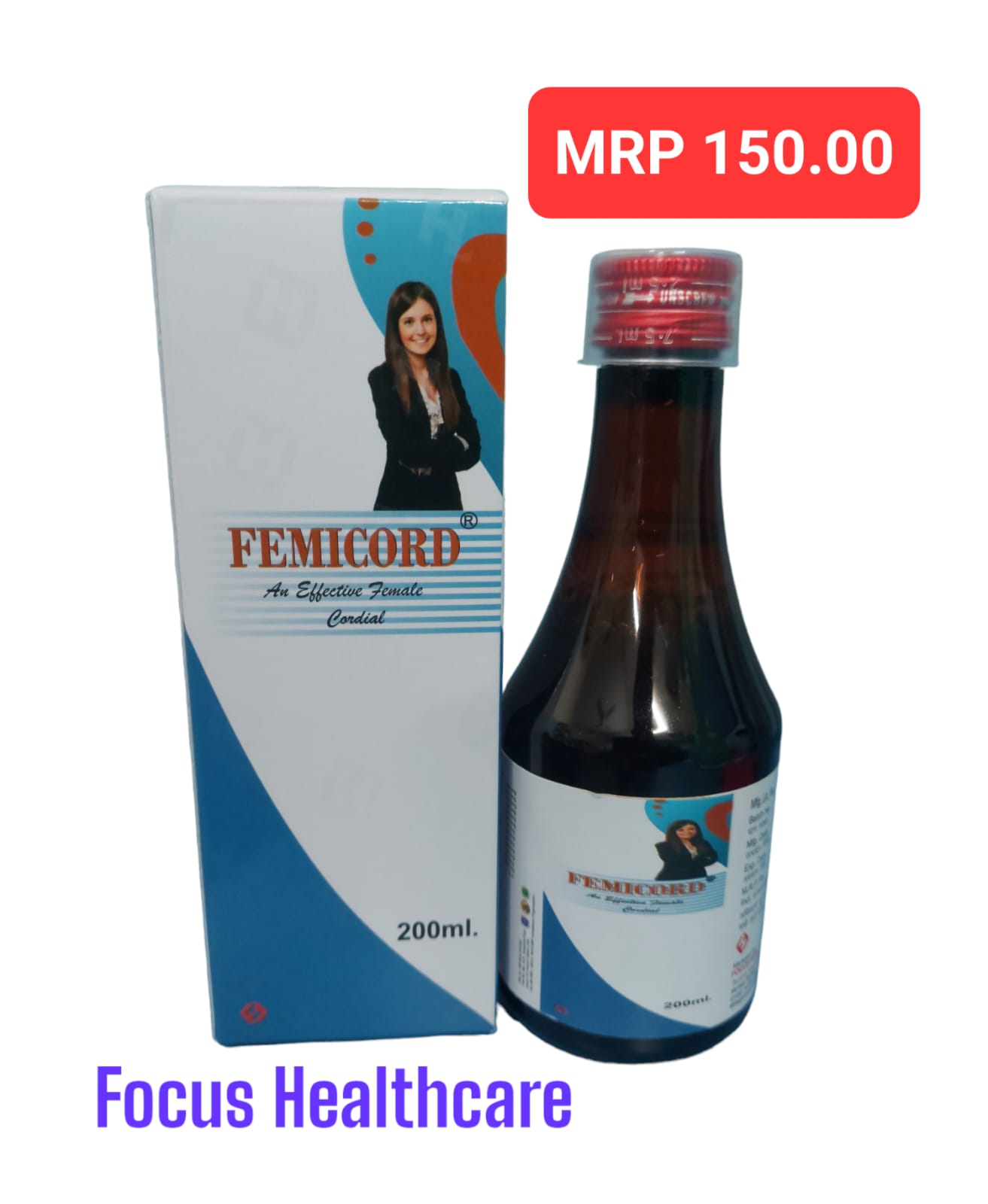 | Syrups Ayurvedic Female Uterine Tonic ₹150 FEMICORD SYRUP - An Ayurvedic Uterine Tonic Syrup Femicord is available in syrup in a PET packing of 200 ml with outer carton. View product → |
How should representatives counsel customers and handle complaints?
Representatives should make only label-supported, legally permitted claims: “supports normal menstrual comfort” is not “treats fibroids” or “guarantees conception.” An AYUSH licence, GMP statement, or traditional-use history does not prove clinical treatment of PCOS, infertility, infection, anaemia, heavy bleeding, or postpartum complications.
| Claim | Responsible wording | Do not say |
|---|---|---|
| Symptom support | Supports the licensed indication and directs persistent symptoms to a clinician | Repairs the uterus, removes blockage, or balances every hormone |
| Disease treatment | Discuss only evidence and permissions that apply to that SKU | Cures fibroids, reverses PCOS, or guarantees pregnancy |
| Category | Confirm whether it is an Ayurvedic, Siddha or Unani drug, food supplement, or another category | Market a supplement as a medicine |
Before recommending or answering a complaint, ask about age, pregnancy or breastfeeding, menstrual pattern, diagnosis, allergies, liver or kidney disease, and every medicine or supplement. Check the full ingredient list with a qualified clinician or pharmacist, especially for anticoagulants, diabetes medicines, blood-pressure medicines, thyroid treatment, hormones, or fertility drugs; do not invent an interaction answer.
- Refer urgently for pregnancy-related bleeding, postmenopausal bleeding, soaking one pad or tampon hourly for two hours, fainting, dizziness, severe or one-sided pelvic pain, fever, or foul-smelling discharge.
- Record product name, batch number, dose, timing, symptoms, pregnancy exposure, medicines, outcome, and reporter contact.
- Escalate suspected reactions, treatment failure, contamination, wrong labelling, and pregnancy exposure through the company’s complaint process and India’s AYUSH pharmacovigilance reporting route. Do not advise rechallenge or conceal the complaint.
Frequently asked questions
What does “female uterine tonic” mean in clinical practice?
It is a marketing category rather than one Ayurvedic diagnosis. A product may have a licensed indication for menstrual discomfort, irregular cycles, leucorrhoea, menopausal symptoms or postpartum recovery, but it cannot be assumed to treat every gynaecological complaint.
When should a clinician investigate before recommending a syrup?
Investigate before recommending a syrup when the customer reports heavy or prolonged bleeding, severe or new pelvic pain, pregnancy or postpartum concerns, fever, fainting, blood-stained discharge or persistent abnormal discharge.
What must you verify on the label before comparing products?
Check the complete ingredient list, serving size, dosage directions, warnings, batch number, manufacturing and expiry dates, manufacturer details, applicable licence information, storage instructions and whether the claimed use matches the label.
How can an Ayurvedic PCD franchise check a product before distribution?
Review the product label and supporting documents, confirm batch traceability and storage requirements, check that promotional claims do not exceed the licensed indication, and establish a process for recording and escalating complaints.
How should representatives counsel customers and handle complaints?
Explain the labelled use and dosage without promising a cure, ask about red-flag symptoms, advise medical evaluation when needed, document the product batch and complaint details, and escalate serious or unexpected reactions promptly.
Keywords